The Black Tie Guide
Navigating formal dress codes with confidence. From the cut of your dinner jacket to the fold of your pocket square — every detail considered, every convention explained, and every opportunity for personal expression identified.
Black tie, despite its name, is not merely about wearing a black tie. It is a complete system of dress, developed over more than a century, in which every element relates to every other. Understanding these relationships is the key to wearing black tie with the ease and confidence it demands.
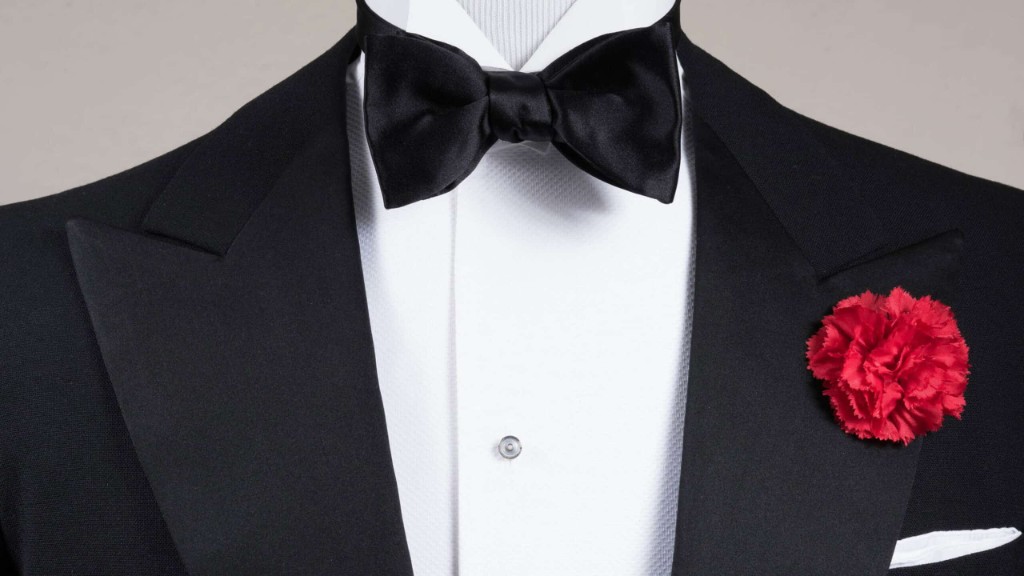
The dinner jacket — or tuxedo, as it is known in America — is the foundation. Its defining feature is the silk-faced lapel, which catches the light of evening and creates a subtle contrast with the jacket's matte body. We offer this in two styles: the peaked lapel, which is more formal and slightly more dramatic, and the shawl collar, which is softer and more convivial. Both are correct; the choice is one of temperament rather than protocol.
The fabric should be black or midnight blue. Midnight blue, paradoxically, appears darker than black under artificial light — a fact known to tailors since the early twentieth century. Our midnight blue dinner suit is cut from a 300 g/m² Loro Piana wool with a subtle grain de poudre texture, lending it a depth that flat black fabrics cannot achieve.
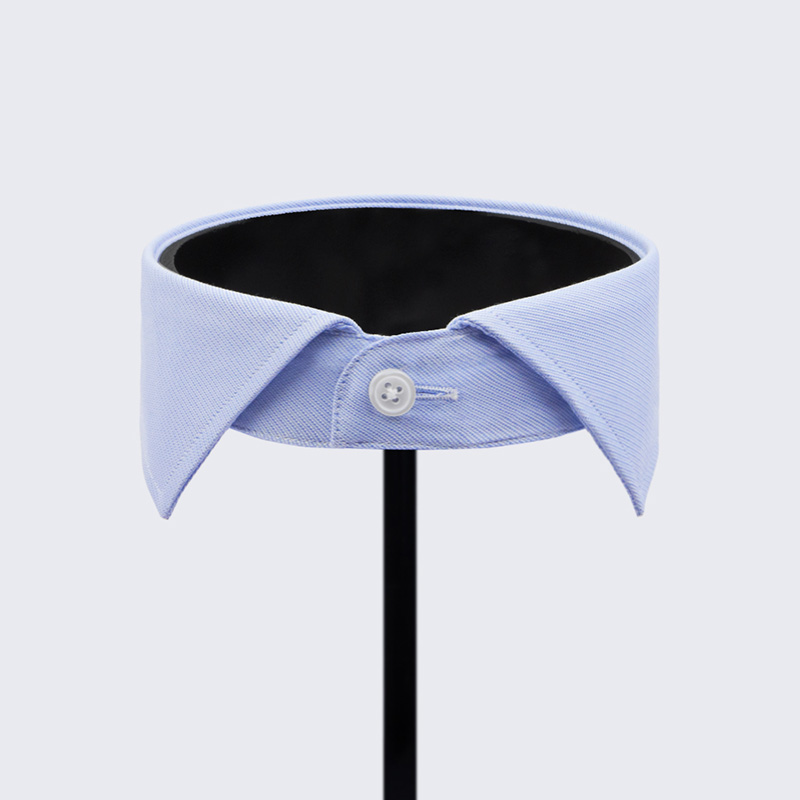
The shirt is where many men falter. A black tie shirt should be white, with a marcella (piqué) front for maximum formality or a plain front for a more contemporary approach. The collar may be wing or turndown — we slightly prefer the turndown, which frames the bow tie more naturally and allows for a more relaxed expression. French cuffs are essential; they provide a canvas for cufflinks, which are among the few pieces of jewellery permitted in formal dress.
The bow tie must be hand-tied. This is not snobbery — it is aesthetics. A pre-tied bow tie has a symmetrical perfection that appears mechanical and lifeless. A hand-tied bow, with its slight asymmetry and the gentle twist of its knot, possesses a character that only real fabric manipulated by real hands can produce. If you cannot yet tie one, we are happy to teach you during your fitting.
Trousers should feature a single stripe of silk braid down each outseam, echoing the silk of the lapels. They should be worn with braces — never a belt, as the waistband's design assumes suspension from the shoulders. The waist should sit at its natural position, and the hem should break cleanly over a patent leather Oxford or a velvet slipper.
The final element is restraint. Black tie is not an invitation to display; it is an exercise in refinement. A white pocket square in a straight fold, a simple dress watch on a black leather strap, and a confidence born of knowing that every detail is correct — these are the true accessories of the well-dressed man.