Behind the Seams: Our Milanese Tailors
In a quiet atelier on Via della Spiga, a small team of master tailors has been crafting garments for LORO since our founding. We visit them at their workbenches to understand what makes Milanese tailoring unique — and why it matters more than ever.
Milan's tailoring tradition differs fundamentally from those of Naples, Rome, or London. Where Neapolitan tailoring celebrates softness and the human form, and Savile Row prizes structure and armour-like precision, Milanese tailoring occupies a distinctive middle ground: structured enough to convey authority, soft enough to move with the body, and finished to a standard that borders on obsessive.
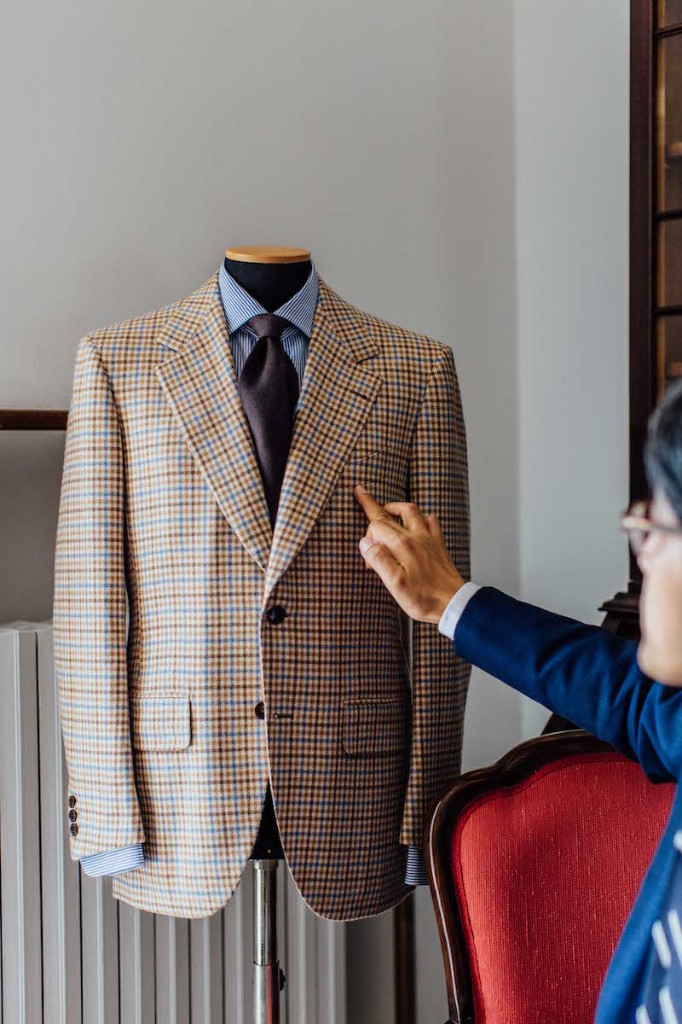
Our head tailor, who has been cutting patterns for forty years, begins each commission by studying the client's measurements — not merely as numbers, but as a portrait of posture, movement, and proportion. He reads a set of measurements the way a musician reads a score: the raw data is just the beginning; interpretation is everything.
The cutting table is a slab of beechwood, worn smooth by decades of use. The shears — German-made, periodically resharpened by a specialist in Bergamo — cut through fabric with a precision that no machine can match. Every piece is cut individually, adjusted to account for the fabric's grain, pattern, and natural tendencies. A striped fabric demands different considerations than a solid; a herringbone behaves differently from a plain weave.
Assembly in the Milanese tradition involves over forty separate operations, many of them invisible in the finished garment. The canvas is shaped using steam and careful manipulation — a process called basting — that allows the chest piece to follow the body's natural contours. Lapels are rolled by hand, creating a curve that sits against the chest with an ease that no fusible interlining can replicate.
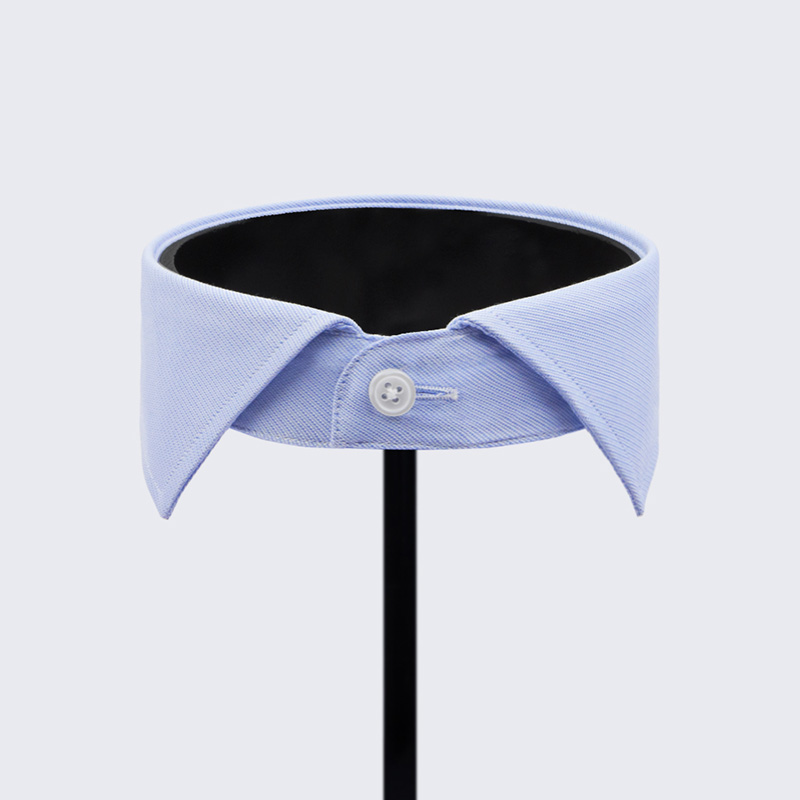
Buttonholes, often considered a minor detail, receive particular attention. Each is hand-sewn using a silk thread that has been waxed to resist fraying. The bartack — the small horizontal stitch at the end of each buttonhole — is reinforced and finished with a precision that reveals itself only under magnification. It is a detail that perhaps one person in a hundred will ever notice, and yet it is executed with the same care every time.
Pressing is the final art — and it is an art. Our pressers use heavy irons and steam to shape the garment into its final form, coaxing the fabric into curves and planes that follow the body's architecture. A well-pressed shoulder should appear to float; a well-pressed lapel should roll naturally from the gorge line. Done correctly, pressing transforms a collection of fabric pieces into something that breathes and moves.
When we ask our tailors why they maintain these time-consuming handwork techniques when machines could achieve seemingly similar results, the answer is always the same: because you can feel the difference. A hand-rolled lapel has a vitality that a machine-pressed one lacks. A hand-sewn buttonhole has a character that a machine cannot produce. These are not abstract qualities — they are tangible, tactile realities that reveal themselves to the wearer over years of use.